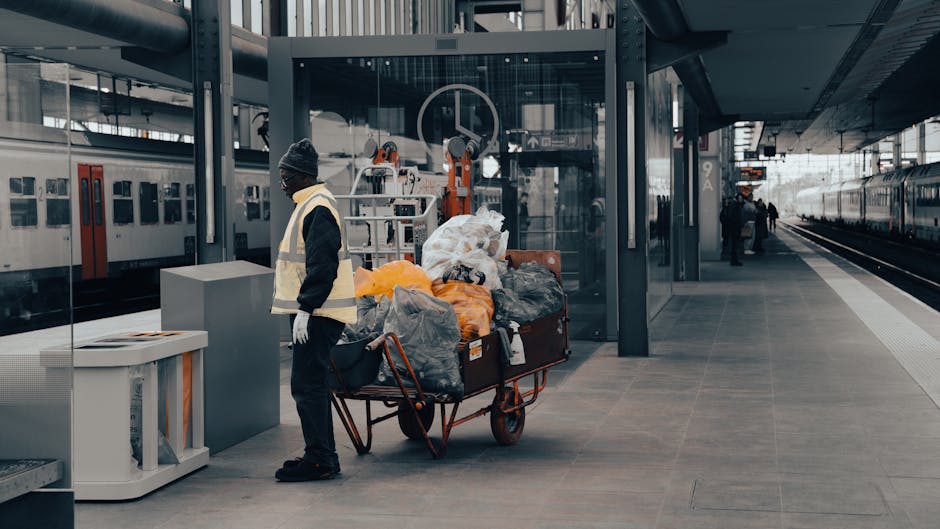
Rubbish removal services near Tooting Broadway station: a practical guide for busy homes, flats, and businesses
If you are looking for Rubbish removal services near Tooting Broadway station, chances are you want one thing above all: the mess gone quickly, safely, and without turning your day upside down. Maybe it is a flat full of boxy old furniture, a pile of bags after a clear-out, or building waste that has appeared faster than the tea went cold. Either way, local rubbish removal should feel straightforward, not like a second project.
This guide breaks down how rubbish removal works near Tooting Broadway, what to expect, who it suits, where people usually go wrong, and how to make a sensible choice. We will also cover practical issues like access, recycling, compliance, and the little details that matter in a busy part of South London. To be fair, those details are often the difference between a smooth clearance and a day of faffing about.
Table of Contents
- Why rubbish removal near Tooting Broadway station matters
- How rubbish removal near Tooting Broadway station works
- Key benefits and practical advantages
- Who this is for and when it makes sense
- Step-by-step guidance
- Expert tips for better results
- Common mistakes to avoid
- Tools, resources and recommendations
- Law, compliance, standards, or best practice
- Options, methods, or comparison table
- Case study or real-world example
- Practical checklist
- Conclusion
- Frequently asked questions
Why rubbish removal near Tooting Broadway station matters
Tooting Broadway is busy. People are moving flats, refurbishing kitchens, clearing student rooms, fitting out offices, and dealing with everyday clutter that builds up faster than expected. In that kind of setting, rubbish is not just an eyesore. It can block hallways, create fire risks, slow down trades, and make a small property feel cramped very quickly.
Local rubbish removal matters because timing and access matter. Near a station, there is often limited parking, tighter roads, shared entrances, and neighbours who would rather not listen to bags being dragged across a landing at 7am. A good service understands that. It plans around access, keeps disruption down, and takes the load off your shoulders.
It also matters because waste disposal is not something you want to improvise. Different items need different handling. General household rubbish is one thing. Mattresses, appliances, broken furniture, garden waste, and construction debris can all need separate sorting or specialist disposal. A service that handles this properly helps you avoid mistakes that can cost time, money, or both.
Practical takeaway: near Tooting Broadway, the best rubbish removal service is not just the one that arrives quickly. It is the one that arrives prepared, respects access limitations, and leaves the place genuinely usable again.
If you are comparing services, it helps to understand the wider offering too. Many people start with general waste clearance and then realise they also need help with a specific job such as flat clearance, house clearance, or office clearance. That is normal. Jobs evolve.
How rubbish removal near Tooting Broadway station works
In simple terms, rubbish removal is a collection-and-clearance service. You tell the provider what needs to go, they estimate the load, agree a price or quote, then collect and dispose of the waste responsibly. The details vary depending on the type of rubbish, the amount, and how easy it is to access.
Most services follow a pattern like this:
- Initial enquiry. You describe the waste, location, access, and any special items.
- Quote or estimate. The provider gives a price based on volume, weight, labour, and waste type.
- Arrival and assessment. The team checks the load, confirms the price if needed, and prepares the clearance.
- Removal. Items are lifted, carried, sorted, and loaded safely.
- Disposal or recycling. Usable materials are separated where possible, and waste is taken to the appropriate facility.
That sounds simple, and often it is. But the real value is in the planning. If your property is on a narrow road, up several flights of stairs, or tucked behind a busy high street near the station, the service needs to think ahead. You do not want a van circling the block while everyone stands around pretending this is all fine. It rarely is.
Specialist jobs may sit alongside general rubbish removal. For example, old sofas and mattresses can be handled through dedicated disposal routes such as mattress and sofa disposal, while large household items may suit furniture disposal or furniture clearance. Choosing the right route makes the job cleaner and usually more efficient.
Key benefits and practical advantages
People usually call a rubbish removal service for convenience, but the benefits go deeper than that.
- Less disruption. You avoid multiple trips to a disposal site, parking stress, and heavy lifting in and out of your car.
- Faster turnaround. A good team can often clear much more in one visit than you could manage in a weekend.
- Safer handling. Bulky, sharp, heavy, or awkward items are moved by people who do this all the time.
- Better sorting. Reusable or recyclable materials can be separated more effectively than in a rushed DIY clear-out.
- Local convenience. For people near Tooting Broadway station, proximity matters. Shorter travel time often means more flexible scheduling.
- Less mental clutter. Strange as it sounds, clearing physical clutter often makes the whole place feel calmer. You notice it straight away.
There is also a practical financial angle. If your time is limited, or if you need multiple items removed in one go, professional removal can be more cost-effective than trying to piece together several separate solutions. That does not mean it is always the cheapest option in a narrow sense. It just may be the better-value choice overall.
For example, a landlord between tenancies may need one stop solution for mixed items, while a homeowner clearing a loft might want a broader service like loft clearance. And if the job spreads beyond one room, home clearance can sometimes be more sensible than trying to categorise every item one by one.
Who this is for and when it makes sense
Rubbish removal near Tooting Broadway station suits a wide range of people. If you recognise yourself in any of the examples below, it is probably worth considering.
- Flat tenants moving out who need bags, broken furniture, and leftover household items gone fast.
- Landlords and letting agents dealing with end-of-tenancy clearances or emergency clean-outs.
- Homeowners tackling a long-overdue declutter or a renovation project.
- Tradespeople who need builders' waste collected after a job.
- Local businesses clearing stock, office furniture, paperwork, or old equipment.
- People with limited mobility or tight schedules who cannot spare the time or physical effort to do it themselves.
It makes sense when the waste is too bulky, too much, too awkward, or simply too time-sensitive for DIY disposal. It also makes sense when access is awkward. In a busy London area, that often means stairs, restricted parking, shared access, or a lift that looks helpful until it is full of a wardrobe.
Some jobs are better matched to more specific services. Builders and decorators may prefer builders waste clearance. Businesses often need business waste removal or confidential shredding. Gardens can be handled through garden clearance. You get the idea: matching the service to the job usually saves time and reduces hassle.
Step-by-step guidance
If you want a smooth clearance near Tooting Broadway station, the process gets much easier when you prepare it properly. Here is a sensible way to do it.
- List what needs removing. Be specific. "A few bits of rubbish" is not as helpful as "three bin bags, a broken desk, two chairs, and a mattress."
- Separate special items. Appliances, furniture, sharps, chemicals, and electronics may need different handling.
- Check access. Think about parking, stairs, lifts, entry codes, and whether someone needs to be present.
- Ask how pricing works. Some jobs are priced by volume, others by load or item type. Clarity helps.
- Confirm timing. If you need the waste gone before a cleaner, decorator, or new tenant arrives, build in a margin.
- Prepare the area. Move personal items away from the load if you can, especially in tight flats.
- Walk through the load on arrival. This avoids misunderstandings and keeps the day moving.
- Check the final result. Make sure the agreed waste is removed and access areas are left tidy.
One useful habit: take photos beforehand. Not because you expect trouble, but because it helps everyone stay on the same page. In our experience, a simple photo or two can prevent a lot of "oh, I thought that was staying" moments. Those moments are not fun.
If you are still comparing options, it is worth reviewing pricing and quotes before you book. It helps you understand what affects the final cost and what details you should mention up front.
Expert tips for better results
Here is where the job gets noticeably easier.
Be clear about volume and access
Most clearance jobs go smoother when the provider knows exactly what they are dealing with. A single sofa in an easy ground-floor flat is very different from a mixed clear-out on the fourth floor with no lift. Small detail, big difference.
Think in categories, not just items
Group waste into broad types: general rubbish, furniture, appliances, garden waste, building debris, and confidential paperwork. That makes it easier to plan and can speed up removal. It also helps if part of the job needs specialist handling.
Use the opportunity to reduce, not just remove
A clearance is often the best time to ask whether something should really be disposed of. Could it be reused? Repaired? Passed on? Donated? You do not need to turn the whole thing into a moral crusade, but a little sorting can reduce waste and make the load smaller.
Book before the pressure point
If you have a move-out deadline or a refurb starting, do not leave booking until the last possible day. That is when every small delay becomes a headache. A little planning goes a long way.
Ask about recycling and disposal methods
Responsible providers should be able to explain how they handle different waste streams. You do not need a lecture, but you should get a confident, sensible answer. If you want to compare that side of the service, take a look at recycling and sustainability.
Common mistakes to avoid
Most clearance problems are avoidable. Usually. Here are the usual suspects.
- Underestimating the amount of waste. People often guess too low. One room somehow becomes three.
- Forgetting about access. A provider can only plan around stairs, parking, or lifts if you tell them.
- Mixing everything together. It is not always a disaster, but it can slow things down and complicate disposal.
- Leaving special items unmentioned. Fridges, freezers, and certain appliances should never be treated as generic rubbish.
- Assuming every quote means the same thing. Some quotes include labour and disposal, some do not. Read carefully.
- Booking too late. The day before a tenant move-out is not ideal. It just isn't.
Another mistake is trying to force a one-size-fits-all solution. For example, if your job is mainly old furniture, a dedicated service like furniture clearance may fit better than a general rubbish pick-up. If you have a fridge, freezer, or another appliance, fridge and appliance removal is the smarter route.
And if the job includes anything potentially risky, take it seriously. Nobody wants a quick job to become a safety issue. That part is obvious, but it is amazing how often people wave it away until the last minute.
Tools, resources and recommendations
You do not need fancy tools for rubbish removal, but a few practical resources can make the process much easier.
- Phone camera. Useful for documenting the load before collection.
- Sticky labels or marker pen. Great for separating "keep", "donate", and "remove".
- Gloves and sturdy shoes. If you are sorting before the team arrives, basic protection helps.
- Clear access path. A hallway without clutter saves time and lowers the risk of knocks and scrapes.
- Simple inventory list. Especially useful for landlords, managers, and office clearances.
For larger or more structured jobs, the most useful "resource" is often a service page that matches the task. A few examples: garage clearance for awkward storage spaces, office clearance for workplace items, and house clearance for fuller property clear-outs. Matching the service to the space makes the whole process easier to manage.
If you are still unsure where your own job fits, you can start broad with waste removal and narrow down from there. That is often the least stressful approach when the pile is a bit mixed.
Law, compliance, standards, or best practice
Waste removal in the UK is not something to treat casually. You do not need to be an expert in waste law to book a clearance, but you should expect the service to handle waste responsibly and in line with accepted practice.
Good practice usually includes:
- sorting waste sensibly where possible
- avoiding illegal dumping, obviously
- using appropriate facilities for disposal and recycling
- handling hazardous or restricted items carefully
- protecting private information where paperwork is involved
For items that may be sensitive, confidential shredding is worth considering rather than simply throwing documents into a general load. For waste that could present risks, such as certain chemicals or difficult materials, specialist handling matters. If you are not sure, ask before collection rather than after. That is the safer route, and the less embarrassing one.
It is also worth checking practical trust signals. A professional provider should be clear about service terms, security, and safety practices. Useful pages to review include health and safety policy, insurance and safety, and payment and security. You are not being fussy by checking these things. You are being sensible.
Options, methods, or comparison table
Different rubbish removal methods suit different situations. Here is a simple comparison to help you think it through.
| Option | Best for | Strengths | Limitations |
|---|---|---|---|
| Professional rubbish removal | Mixed waste, bulky items, fast turnaround | Convenient, less lifting, usually quicker | Cost may be higher than doing it yourself |
| Skip-style solution | Longer projects, ongoing renovation waste | Good for repeated loading over time | Needs space, permits may be relevant depending on placement |
| DIY disposal | Small amounts of light rubbish | Flexible if you already have transport | Time-consuming, effort-heavy, less practical for bulky loads |
| Specialist item removal | Appliances, sofas, mattresses, confidential waste | Tailored handling, cleaner disposal route | Not ideal for mixed loads unless combined with another service |
If your job is mainly about a single category, a specialist route often makes more sense. For instance, sofas and beds may fit better with mattress and sofa disposal, while appliances sit more naturally under appliance-focused removal. For a mixed job, general rubbish removal is often the cleanest choice.
One more small but useful point: if you are dealing with a flat near the station, ease of access can matter more than the item count. A small load on the top floor with no lift may take longer than a larger ground-floor job. Funny how that works out, but it does.
Case study or real-world example
A typical near-station job might look like this. A couple moving out of a second-floor flat close to Tooting Broadway station have two sofas, a broken chest of drawers, several bagged household items, and a few loose bits left after packing. They also have limited parking and a narrow entrance, which makes timing important.
Instead of trying to dismantle everything themselves and make repeated trips, they book a local clearance service. They send a few photos, confirm access details, and make sure the provider knows about the bulky furniture in advance. On the day, the team arrives prepared, protects the route through the property, removes the items in one visit, and leaves the flat ready for cleaning.
That sort of job sounds ordinary, but it saves a surprising amount of stress. The real value is not dramatic. It is quiet. Fewer interruptions. Less dust in the corridor. No van parked awkwardly while the neighbour tries to reverse out. A boring kind of success, which is usually the best kind.
For situations like this, a broader service such as flat clearance or home clearance can be the most efficient route because it handles mixed loads without turning every item into a separate decision.
Practical checklist
Use this checklist before booking rubbish removal near Tooting Broadway station.
- Confirm exactly what needs to be removed.
- Separate anything you want to keep, donate, or recycle.
- Note bulky items, heavy items, and anything fragile.
- Check stair access, lift access, and parking restrictions.
- Tell the provider about appliances, mattresses, or sofas.
- Ask whether the job includes labour and disposal.
- Check the timing against your move, renovation, or clean-up deadline.
- Make sure private papers are not mixed into general waste.
- Clear the path where possible so the team can work safely.
- Keep your phone handy in case the crew needs to confirm access on arrival.
It is a simple checklist, yes, but simple often works. The more prepared you are, the smoother the whole job tends to feel.
Conclusion
Rubbish removal services near Tooting Broadway station are most useful when they save you time, reduce stress, and handle the awkward bits properly. That means more than just lifting bags into a van. It means understanding local access, separating waste sensibly, disposing of items responsibly, and keeping the process clear for you from start to finish.
If your job involves a flat, house, office, garage, loft, garden, or mixed waste after a clear-out, the right service should make your life easier almost immediately. You should feel relief, not more admin. Simple as that.
If you are ready to take the next step, explore the relevant service pages, review the pricing information, and choose the option that fits your waste type and schedule. A well-planned clearance can take a surprisingly heavy weight off your mind. And honestly, that feels good.
Get a free quote today and see how much you can save.
Frequently Asked Questions
What counts as rubbish removal near Tooting Broadway station?
It usually means the collection and disposal of unwanted household, office, garden, or mixed waste from properties near the station. That can include bagged rubbish, bulky items, furniture, appliances, and clearance leftovers.
Is rubbish removal better than hiring a skip?
It depends on the job. Rubbish removal is often better for mixed loads, bulky items, and tighter access. A skip may suit longer projects where you want to load waste yourself over time.
How do I know which service to book?
Choose based on the waste type. Furniture goes one way, appliances another, and building debris may need a dedicated clearance service. If the load is mixed, a general waste removal service is often the easiest start.
Can I book rubbish removal for a flat with no lift?
Yes, but you should mention it early. Stairs affect access, timing, and labour, so the service can plan accordingly.
What should I do before the team arrives?
Separate items you want to keep, clear a path if possible, and tell the provider about any heavy, awkward, or special items. A few photos can help too.
Do rubbish removal services take sofas and mattresses?
Often yes, but these items are usually best handled through dedicated disposal options such as mattress and sofa disposal or furniture clearance, depending on what else is being removed.
Can old appliances be taken away?
Usually yes, but appliances should be flagged in advance. Fridges, freezers, and similar items are better handled through appliance-specific removal rather than lumped in with general rubbish.
What happens to the rubbish after collection?
It is usually taken for sorting, recycling, and disposal through appropriate facilities. Good providers aim to separate reusable or recyclable materials where possible.
Is rubbish removal suitable for businesses near Tooting Broadway station?
Yes. Offices, shops, and small businesses often use rubbish removal for furniture, stock, paperwork, and general waste. Business waste removal can be especially useful when the job needs a tidy, efficient clearance.
How can I avoid hidden costs?
Be clear about volume, access, stairs, bulky items, and any special waste. Ask what the quote includes so you know whether labour, disposal, and loading are covered.
What if I have hazardous or sensitive waste?
Do not mix it into general rubbish. Ask about specialist handling for hazardous items and use confidential shredding for private paperwork where needed.
Is local rubbish removal worth it for a small load?
Often yes, especially if the load is awkward or you do not have time to deal with it yourself. Even a small pile can be a nuisance when access is tight or the deadline is close.
Can I combine rubbish removal with a bigger clearance?
Absolutely. Many people start with one room and then realise a broader service like flat clearance, home clearance, or house clearance is more practical. That is very common, and usually a smart move.
How quickly can rubbish removal be arranged?
That depends on availability and the size of the job. Near a busy station area, it is sensible to book as early as you can, especially if you have a move-out date or renovation deadline.
Where should I start if I am not sure what I need?
Start with a clear list of items, then review the most relevant service pages and pricing details. If your load is mixed, a general waste removal page is a good place to begin before narrowing it down.